When to Service Your Truck Transmission: Warning Signs for Fleet Owners around Sacramento
In the world of logistics and commercial transport, the transmission is the mechanical heart that translates engine power into the motion required to move massive loads. For businesses operating heavy-duty vehicles, a transmission failure isn’t just a mechanical setback; it is a significant operational disruption that can lead to missed deadlines, unhappy clients, and thousands of dollars in lost revenue. For fleet owners operating around Sacramento, where the combination of high summer temperatures and the demanding grades of the Sierra Nevada foothills puts unique stress on drivetrains, understanding when to seek truck transmission repair is a critical skill for maintaining a healthy bottom line.
Proactive fleet maintenance services are designed to catch small issues before they manifest as catastrophic failures. However, even with the best schedules, the heavy-duty nature of the industry means components will eventually wear. Recognizing the early warning signs of transmission distress is essential for any fleet manager or driver who wants to ensure their vehicles remain on the road rather than on the hook of a heavy-duty tow truck.
The Financial Impact of Ignoring Transmission Health
The cost of a complete transmission rebuild or replacement for a Class 8 truck can easily reach five figures. Beyond the parts and labor, the downtime associated with such a major heavy duty truck repair can sideline a vehicle for days or even weeks. When you consider the tight margins in the Sacramento Valley transportation corridor, every hour a truck sits idle is an hour of negative cash flow.
By identifying symptoms early, fleet owners can often resolve issues through simpler interventions, such as fluid flushes, sensor replacements, or minor adjustments. This proactive approach not only saves money on the immediate repair but also extends the total lifespan of the vehicle’s drivetrain.
Key Warning Signs Your Truck Needs Transmission Service
Detecting transmission trouble requires a combination of sensory awareness and diagnostic data. Drivers are often the first line of defense, as they are the ones who feel the vehicle’s behavior changes in real-time.
1. Slipping Gears and Loss of Pull
One of the most obvious signs that a transmission is failing is gear slipping. This occurs when the truck unexpectedly pops out of gear while driving or fails to stay engaged under a heavy load. You might notice the engine RPMs climbing rapidly while the vehicle’s road speed stays the same or even drops. This is a clear indicator that the internal clutches or bands are not holding correctly. For drivers navigating the heavy traffic on I-5 or the CA-99 around Sacramento, this lack of predictable power can be a major safety hazard.
2. Delayed Engagement or Hesitation
When a driver shifts from “Park” or “Neutral” into “Drive” or “Reverse,” the response should be nearly instantaneous. If there is a noticeable delay of several seconds before the transmission engages and the truck begins to move, the system is struggling. This is often caused by low fluid levels, worn internal seals, or a failing pump. Ignoring this “lag” will eventually lead to a total loss of drive.
3. Harsh or Erratic Shifting
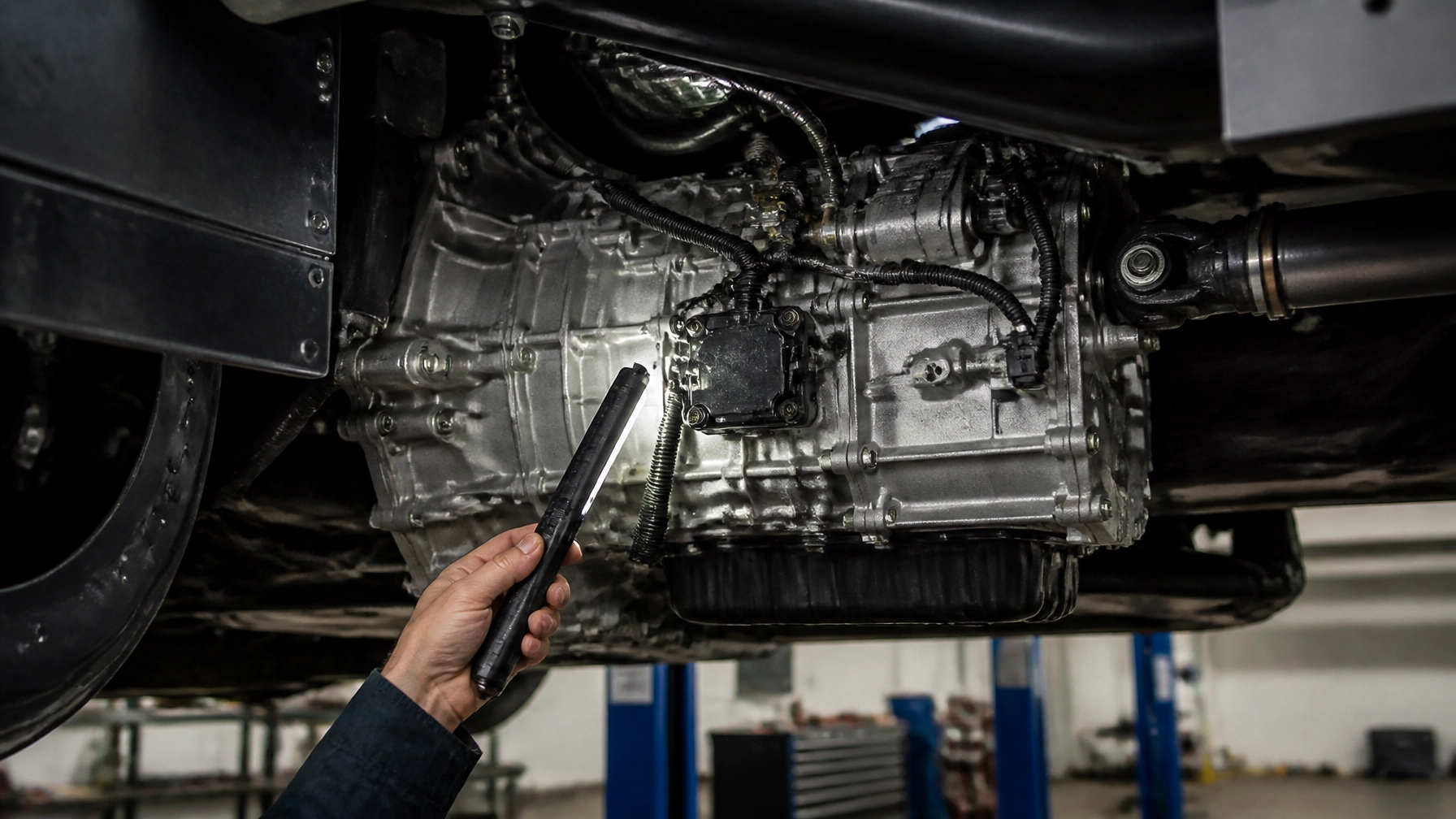
Modern automated manual transmissions (AMTs) and traditional automatics are designed to shift smoothly. If the truck begins to jerk, jolt, or “bang” during gear changes, something is wrong. Erratic shifting: where the truck seems to “hunt” for the right gear: indicates a communication error between the transmission control unit (TCU) and the mechanical components. This behavior is particularly taxing on the drivetrain and should be addressed immediately through professional fleet transmission inspection.

4. Unusual Noises: Grinding, Whining, or Clunking
A healthy transmission operates relatively quietly. New or unusual sounds are almost always a signal of internal wear. Whining or humming sounds often point to a failing torque converter or oil pump, while grinding noises usually suggest that gears or bearings are wearing down. In heavy-duty trucks, these sounds can sometimes be masked by engine noise, so it is important for drivers to perform regular “ears-on” checks during low-speed maneuvers.
5. Fluid Leaks and Discoloration
Transmission fluid is the lifeblood of the system; it provides cooling, lubrication, and hydraulic pressure. If you see puddles of bright red or dark brown fluid under your parked vehicles around Sacramento, you likely have a leak in the lines, seals, or the transmission pan. Furthermore, checking the dipstick is a vital part of fleet maintenance services. Healthy fluid should be translucent and reddish. If it appears dark, opaque, or contains metal shavings, the internal components are actively degrading.
6. The Burnt Odor of Overheating
If a truck returns to the yard smelling like burnt toast or acrid chemicals, the transmission fluid has likely overheated. Sacramento’s summer heat can push transmission temperatures to the limit, especially when hauling heavy loads through stop-and-go traffic. Once fluid “cooks,” it loses its ability to lubricate, leading to rapid friction-based damage to the gears and clutches.
Sacramento’s Unique Challenges for Fleet Transmissions
The geography and climate of the Sacramento area present specific challenges for heavy-duty drivetrains. Fleet owners in this region must account for:
- Extreme Heat: With summer temperatures frequently exceeding 100°F, the cooling systems of your transmissions are under constant stress. Heat is the primary killer of automatic transmissions.
- Stop-and-Go Traffic: The congestion on major arteries like the I-80 and US-50 corridors forces frequent shifting and constant engagement/disengagement of the clutch in AMTs, leading to accelerated wear.
- Mountain Grades: Fleets heading east toward the Sierras subject their transmissions to sustained high-torque demands on long inclines. These “severe duty” conditions require more frequent fluid changes and inspections than standard highway driving.
The Role of Mobile Fleet Repair in Transmission Health
In the past, any transmission issue meant a trip to a specialized shop and days of downtime. However, modern mobile fleet repair has changed the landscape. Many early-stage transmission issues: such as sensor failures, fluid leaks, or software glitches: can be diagnosed and repaired on-site at your facility or even on the side of the road.
Utilizing mobile services allows fleet managers to address “yellow flags” without the logistical headache of shuffling vehicles between yards and repair shops. This flexibility is a cornerstone of efficient fleet engine maintenance and overall vehicle health.
Best Practices for Transmission Longevity
To minimize the need for major repairs, every Sacramento-based fleet should implement these core practices:
- Strict Fluid Intervals: Don’t wait for the manufacturer’s maximum mileage. Given the local heat and terrain, consider shortening your fluid and filter change intervals by 20-25%.
- Driver Reporting Culture: Encourage drivers to report even the slightest change in “shift feel.” A driver who notices a minor shudder today could prevent a roadside breakdown tomorrow.
- Diagnostic Scans: During every preventative maintenance (PM) service, perform a full diagnostic scan of the TCU. Often, the computer will log “soft codes” (temporary faults) long before a dashboard light appears.
- Cooling System Maintenance: Ensure that transmission coolers are free of debris and that the lines are not crimped or leaking. If the engine’s cooling system is struggling, the transmission will likely follow suit.
Conclusion: Protect Your Assets with Proactive Care
A heavy-duty truck is a massive investment, and the transmission is one of its most complex and vital systems. For fleet owners around Sacramento, the cost of reactive maintenance: waiting for the truck to fail: is simply too high. By staying vigilant for the warning signs of slipping, unusual noises, and fluid degradation, you can transform your fleet operations from a cycle of emergency repairs into a streamlined, predictable process.
Reliability is the currency of the logistics industry. When you prioritize fleet maintenance services and act quickly on transmission warning signs, you protect your drivers, your cargo, and your company’s reputation.
Don’t let a failing transmission sideline your operations. If you’ve noticed any of these warning signs in your fleet, it’s time to act. Contact Rapid Fleet Services today to schedule a comprehensive transmission inspection or to learn more about our on-site mobile repair solutions. Let our experts keep your fleet moving forward efficiently and reliably.
Comments are closed