Why Regular Oil & Filter Changes Are Essential for Engine Health and Longevity

Every time you turn the key or press the start button, your vehicle’s engine springs to life, ready to carry you wherever you need to go. But under the hood, countless moving parts work together under intense heat and pressure to keep your car or fleet vehicle moving forward. To make sure that complex dance runs smoothly, clean engine oil and a fresh oil filter are absolutely essential.
Yet, despite being one of the simplest and most affordable maintenance tasks, many drivers and fleet managers overlook routine oil changes and oil filter replacements. They stretch intervals too far, forget appointments, or delay that lube and filter service until “next time.” The reality is, skipping a scheduled oil maintenance might save a few bucks today, but it can cost you thousands down the road.

If you’ve ever wondered why that full-service oil change is so important—or what really happens when you put off routine engine service—this article is for you.
Why Does Engine Oil Matter So Much?
Think of engine oil as the lifeblood of your vehicle. It flows through the engine’s critical parts, performing several key functions:
- Lubrication: Inside your engine, metal parts like pistons, camshafts, and bearings move at high speeds. Without proper lubrication, these parts would grind together, causing friction and excessive wear. Fresh oil creates a thin, protective barrier that keeps everything gliding smoothly.
- Cooling: Combustion generates heat, and while your radiator helps keep engine temperatures stable, engine oil carries away excess heat from hard-to-reach places that coolant can’t reach.
- Cleaning: Over time, tiny metal shavings, carbon deposits, and dirt build up inside the engine. Oil helps suspend and trap these contaminants, carrying them to the oil filter where they’re removed.
- Sealing: Engine oil helps seal gaps between the piston rings and cylinder walls, maintaining compression and preventing power loss.
The Hidden Danger of Dirty Oil
If you skip an engine oil change for too long, the oil gets dirty and loses its protective qualities. Instead of lubricating, it becomes thick and sludgy. Dirty oil can’t carry away heat as effectively, nor can it clean the engine’s inner surfaces.
Old oil can also turn acidic, corroding metal surfaces from the inside out. That once-smooth protective layer breaks down, and friction between parts skyrockets. Eventually, critical components like camshafts, bearings, or pistons can wear out or even seize—leading to catastrophic engine failure.
The Oil Filter: Small Part, Big Job
While engine oil does the heavy lifting, the oil filter quietly does its part to keep your oil clean. As oil circulates through the engine, it picks up contaminants—dust, dirt, and tiny bits of metal. The oil filter traps these particles, preventing them from recirculating and causing damage.
However, an oil filter has a limited capacity. Once it’s full, it can no longer filter effectively. A clogged filter can even restrict oil flow, starving the engine of the lubrication it desperately needs.
That’s why a proper lube and filter service always includes replacing the oil filter along with the oil itself. It’s a small investment that pays off by extending engine life.
What Happens If You Miss Routine Engine Service?
Let’s break down what can happen if you skip that full-service oil change or delay your scheduled oil maintenance:
- Reduced Performance: Dirty oil increases friction, which can cause sluggish acceleration, rough idling, and lower fuel efficiency.
- Increased Wear: Without proper lubrication, engine parts wear out faster. Over time, this wear can cause costly damage to pistons, crankshafts, camshafts, and bearings.
- Overheating: Sludgy oil can’t absorb heat efficiently. This may lead to overheating, warped components, or blown gaskets.
- Complete Engine Failure: In the worst cases, neglected oil changes can cause catastrophic engine damage that requires a full engine rebuild or replacement—one of the most expensive repairs you can face.
How Often Should You Get an Oil & Filter Change?
There’s no one-size-fits-all answer. Modern engines and synthetic oils have come a long way, and many vehicles can go 5,000 to 7,500 miles—or more—between oil changes. But heavy-duty or fleet vehicles often need oil changes more frequently, especially if they operate under severe conditions like stop-and-go driving, towing, or extreme temperatures.
Always follow the manufacturer’s recommended schedule for routine engine service. And if you manage a fleet, a preventive maintenance plan is essential. Many fleet managers rely on experts like Rapid Fleet Services to keep every vehicle on track with scheduled oil maintenance that’s customized to each vehicle’s usage.
Signs You’re Due for an Engine Oil Change
Sometimes life gets busy and odometer readings slip your mind. Here are a few warning signs that your vehicle might be overdue for a lube and filter service:
- The oil change or check engine light is on.
- The oil is dark, thick, or gritty when you check the dipstick.
- You hear knocking or ticking noises from the engine.
- There’s an unusual burning smell under the hood.
- Your vehicle’s performance or fuel economy has noticeably dropped.
If you notice any of these red flags, it’s time to schedule that full-service oil change before bigger problems develop.
The Rapid Fleet Services Advantage
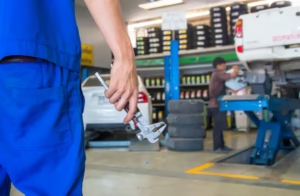
At Rapid Fleet Services, we understand that keeping up with routine engine service can be tough—especially for busy businesses that rely on multiple vehicles to keep operations running smoothly. That’s why we make it easy to stay on top of essential maintenance with flexible, reliable solutions designed to keep your fleet on the road and your mind at ease.
We offer comprehensive oil filter replacement and engine oil change services for fleets throughout the San Francisco Bay Area and Sacramento. Whether you need mobile maintenance on-site or prefer to bring your vehicles to our full-service facility, our skilled technicians handle every oil change with precision and care.
By partnering with Rapid Fleet Services, you’re not just getting a quick oil change—you’re investing in long-term engine health, reduced downtime, and better performance for every vehicle you own.
Don’t Wait—Protect Your Fleet Today
Engine oil is the single most important fluid in your vehicle, and fresh oil combined with a clean filter is your best defense against premature engine wear and expensive repairs. Whether you manage a single work truck or a fleet of dozens, staying consistent with scheduled oil maintenance is the simplest way to maximize lifespan and reliability.
If your vehicles are due for a full-service oil change or it’s time to review your fleet’s routine engine service plan, Rapid Fleet Services is ready to help. Our mobile units and in-shop teams deliver fast, thorough, and cost-effective lube and filter service you can trust—keeping your fleet running strong without interrupting your business.
Call Rapid Fleet Services today to schedule your next oil filter replacement and engine oil change. Let’s keep your fleet healthy, efficient, and always ready to roll.
Comments are closed