Mobile Diesel Mechanic vs. Towing to a Shop: Which One Actually Saves You a Day of Downtime?
A truck that will not start at 6 a.m. puts a fleet manager on the clock. The first decision, call a mobile diesel mechanic or arrange a tow, can determine whether the vehicle is back in service that day or loses additional time waiting for transport, shop intake, diagnosis, and parts.
Neither option is right for every breakdown. The practical choice depends on what failed, whether the vehicle is safe to work on, what equipment the repair requires, and whether the necessary part is available. Use the framework below to make that call quickly and keep downtime under control.
What actually determines downtime?
A repair’s total downtime includes more than hands-on labor. Count each step from the moment the vehicle is taken out of service:
- Dispatch and travel: How soon can a mobile technician arrive, or a tow provider reach the vehicle?
- Transport and intake: A shop repair may require loading, towing, check-in, and waiting for a service bay.
- Diagnosis: Is the fault identifiable with on-site testing, or does it require more extensive shop equipment?
- Parts: Is the correct part available, and can it be installed at the vehicle’s current location?
- Repair and verification: How long will the repair take, and what testing is needed before returning the vehicle to work?
A tow may be the right move, but it adds steps before shop work can begin. Mobile fleet repair can remove the tow and intake stages when the problem is suitable for on-site service. It cannot eliminate delays caused by difficult diagnostics, unavailable parts, or a repair that needs a fully equipped shop.
When mobile repair is the better first call
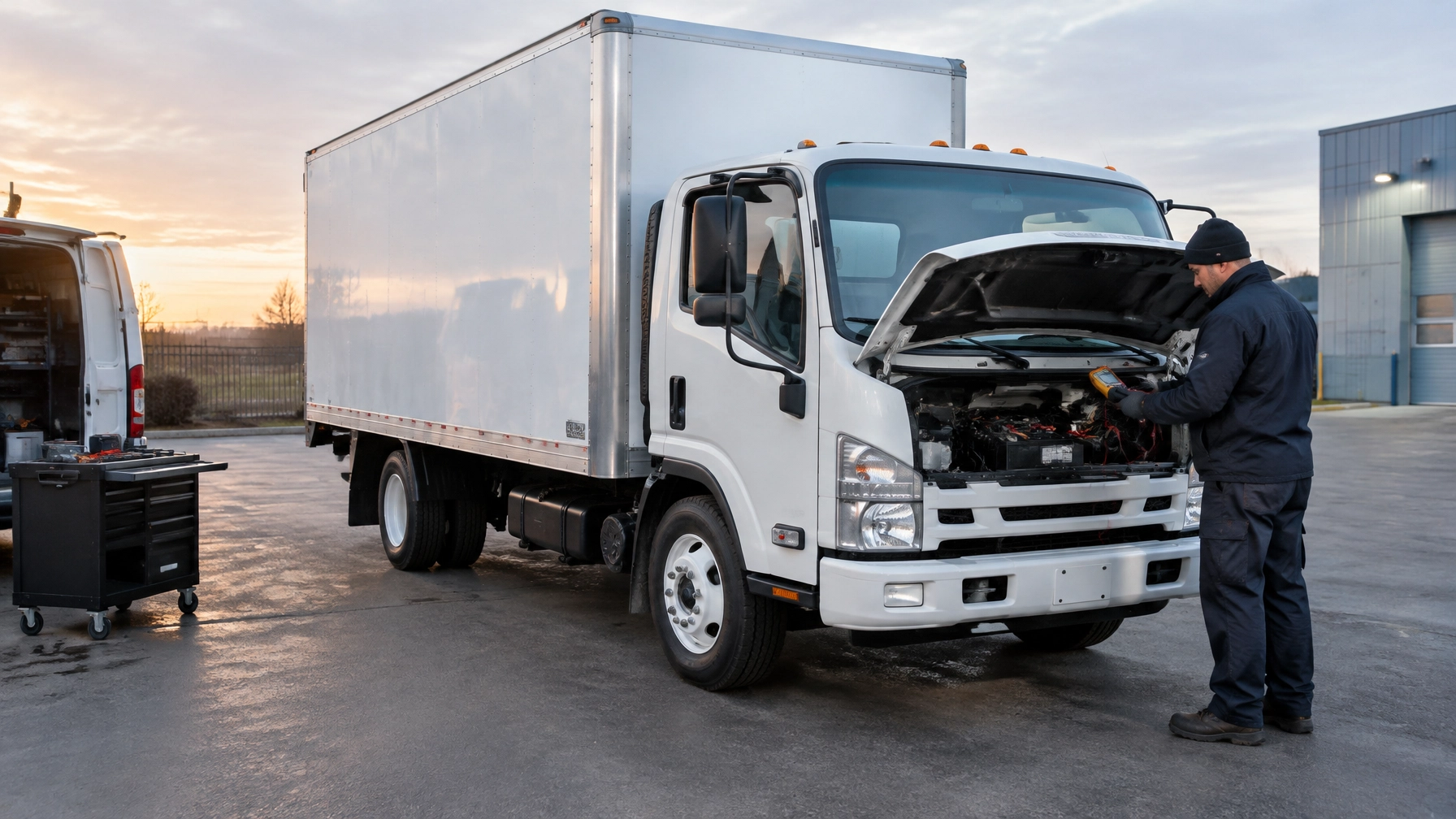
A mobile diesel mechanic is often the more efficient first response when the truck is accessible, the work area is safe, and the likely repair fits the technician’s on-site capability. Common candidates include:
- A weak or discharged battery
- Starter or alternator symptoms
- Loose, corroded, or damaged battery connections
- A charging-system or other electrical fault
- A lighting issue or blown fuse
- Roadside diagnostics for warning lights or fault codes
- Certain tire concerns and minor repairs that can be completed safely on-site
Testing matters. A no-start does not automatically mean the battery needs replacement. The mechanic may need to check battery condition, connections, starter operation, charging output, and related wiring to identify the cause. Replacing a part without confirming the fault can leave the vehicle stranded again.
Before dispatch, share the unit’s year, make, model, engine, location, symptoms, and any fault codes. Ask which diagnostic tools and likely parts the technician can bring, and confirm whether the exact part is available. A mobile visit is most valuable when it leads to a verified repair, not simply an on-site diagnosis followed by an avoidable second trip.
Rapid Fleet Services provides mobile fleet repair in the San Francisco Bay Area, Sacramento, and West Sacramento. Whether a particular repair is suitable for mobile service depends on the vehicle, fault, location, and parts required.
When towing to a shop makes more sense
Choose a shop when the work needs equipment, space, or testing that cannot be provided safely or effectively where the vehicle is stopped. Examples include:
- Major engine or transmission work
- Replacement of a large or difficult-to-access component
- Repairs requiring a lift or extensive disassembly
- Complex or intermittent electrical faults that need extended diagnosis
- Work that requires specialized programming or controlled testing
- A repair that cannot be completed safely at the vehicle’s location
Towing is also the safer option if the vehicle is in a hazardous position, has a safety-critical failure, or cannot be moved without risking further damage. Do not put a vehicle back into service until the fault has been properly repaired and the vehicle is safe to operate.
A shop visit can involve more than towing. Confirm the shop’s earliest intake and bay availability, ask whether it can handle the specific vehicle and repair, and check parts availability before authorizing transport. That helps prevent a truck from arriving at a shop only to wait for capacity or a part.
For repairs suited to a facility, in-shop fleet service provides access to shop equipment and a broader repair environment.

Compare the total cost, not just the labor rate
The mobile option may have a call-out fee or a different labor rate. A tow-and-shop repair may have transport, handling, and additional downtime costs. Compare the full impact rather than choosing based on one line on an estimate.
Use this simple calculation:
Total breakdown cost = repair labor + parts + call-out or towing + driver and logistics costs + downtime cost
To estimate downtime cost, multiply the number of days the vehicle is unavailable by the business’s estimated daily cost for that unit. Include the effect on deliveries, scheduled jobs, driver time, substitute vehicles, and any work that must be reassigned. Use your own fleet figures; downtime costs vary by vehicle and operation.
For example, compare two realistic timelines using confirmed estimates:
- Mobile route: Technician arrival + diagnosis + time to source and install the part + verification.
- Shop route: Tow response + loading and transport + shop intake and queue + diagnosis + parts wait + repair and verification.
If mobile diagnosis confirms a common repair and the part is available, skipping the tow and intake stages may get the unit back sooner. If the diagnosis points to a major component or a shop-only repair, a mobile visit followed by a tow can add time and cost. Ask the technician to explain when the repair can be completed on-site and when a shop is the more direct path.
A fast decision framework for fleet managers
When a vehicle will not start, work through these checks in order:
- Is the location safe for a repair? If not, arrange appropriate recovery. Do not trade safety for speed.
- Does the symptom suggest a bounded mobile repair? Battery, starting, charging, lighting, or a straightforward electrical issue may be a good candidate.
- Can the technician diagnose and complete the repair on-site? Confirm tools, likely parts, and the plan before dispatch.
- Does the job need shop equipment or extensive work? Arrange towing to a facility that can handle the vehicle and repair.
- Which option gets the unit safely back into service sooner? Compare the full timeline, parts availability, and expected repair steps, not just the arrival time.
A fleet policy can make the decision faster. Set an authorization limit for mobile diagnosis and minor repairs, identify the point at which the vehicle should be sent to a shop, and decide who approves towing and additional work. The right thresholds depend on your fleet’s operating costs and service requirements.
Reduce repeat no-starts with a clear repair handoff
Whether the repair is mobile or in-shop, ask for the cause of the failure, the checks performed, the repair completed, and any follow-up recommendation. If the same vehicle has had repeated battery or starting problems, record the dates and symptoms. That history can help the technician spot a recurring charging, connection, or electrical issue instead of treating each call as an isolated event.
Scheduled fleet maintenance can also help identify developing battery, charging, and electrical problems before a vehicle misses a departure. Pair breakdown response with a consistent fleet maintenance services plan so that urgent repairs do not become the only time vehicles receive attention.
Choose the repair path that minimizes the whole outage
For an accessible vehicle with a likely battery, starting, lighting, or straightforward electrical issue, mobile service can avoid towing and shop intake. For major component work, complex diagnostics, or unsafe conditions, a shop is usually the more appropriate choice. The best decision is the one that gets the vehicle repaired correctly, safely, and with the fewest avoidable delays.
Rapid Fleet Services provides mobile and in-shop commercial vehicle repair for businesses in the San Francisco Bay Area, Sacramento, and West Sacramento. For a no-start or other fleet repair need, call +1 916 642-5191 to discuss the vehicle, symptoms, and the service option that fits the job.
Comments are closed