Parts Prices Are Up 20% in 2026: How to Keep Your Maintenance Budget From Bleeding Out
Parts inflation is changing how fleet managers budget for repairs in 2026. Filters, brake components, batteries, sensors, belts, hoses, and other commonly replaced items are costing more than they did a few years ago. Industry benchmarking has reported commercial vehicle parts increases exceeding 20% since 2020, while maintenance labor and emergency service costs have also continued to rise. Current fleet cost reporting shows why maintenance budgets need more than a simple annual percentage adjustment.
For fleet managers in the San Francisco Bay Area and Sacramento, the answer is not to postpone service. Delaying maintenance allows small defects to become larger failures. In many cases, reactive repairs cost three to nine times more than planned preventative maintenance after emergency labor, rush parts, towing, lost productivity, and vehicle downtime are included.
A stronger approach is to use fleet preventative maintenance as a budget-control strategy. The goal is simple: identify wear earlier, schedule repairs before failure, and keep commercial vehicles productive.
Why Higher Parts Prices Make Breakdowns More Expensive
A worn belt or leaking hose may be relatively inexpensive to address during a scheduled service visit. If that same component fails on the road, the total cost can include:
- Emergency dispatch or roadside service
- Towing or vehicle recovery
- Rush shipping for unavailable parts
- Additional diagnostic time
- Overtime labor
- Missed delivery or service appointments
- Rental vehicles or replacement capacity
- Driver and customer scheduling disruptions
The part itself may represent only one line on the invoice. The larger financial impact comes from the conditions surrounding the failure.
For a fleet operating small cars, light trucks, Dodge 5500 or Ford 550 medium-duty service trucks, and Hino or Isuzu 16- to 24-foot box trucks, reliability depends on controlling these indirect costs. A vehicle that is unavailable for a full shift can disrupt an entire route, crew, or project schedule.
That is why a 20% parts increase should not be treated as an excuse to reduce maintenance. It should be a reason to improve planning.
The 3–9x Cost Difference: Planned Service Versus Reactive Repair
The actual cost difference varies by vehicle, failure, location, and downtime exposure. However, the three-to-nine-times range is a useful planning benchmark for understanding the financial risk of deferred maintenance.
Consider a scheduled brake inspection. A technician may identify uneven pad wear, a damaged hose, or a sticking caliper before the problem affects vehicle operation. The fleet manager can approve the repair, source the correct parts, and schedule the vehicle around its route.
Now compare that with a brake-related failure during a delivery run. The vehicle may require roadside service, a tow, expedited parts, and a second trip if the first technician cannot complete the repair. The business may also lose the day’s revenue from that vehicle.
Preventative maintenance does not eliminate every breakdown. It does, however, reduce the probability of high-cost failures and gives managers more control over when and how repairs occur.
Top 7 Practices to Keep Your Fleet Maintenance Budget Under Control
1. Build a maintenance schedule around use, not only calendar dates
Mileage, engine hours, route conditions, payload, idling, and stop-and-go operation all affect service intervals. A delivery vehicle working congested Bay Area routes may experience different wear from a Sacramento box truck operating longer regional routes.
Track the conditions that matter for each unit. Then schedule oil and fluid service, inspections, filter replacement, brake checks, and other work based on actual operating demands.
A customized schedule is more effective than applying one generic interval to every vehicle.
2. Inspect low-cost components before they cause high-cost failures
Technicians should routinely inspect:
- Engine oil, coolant, and transmission fluid
- Belts, hoses, clamps, and fittings
- Brake pads, rotors, drums, and lines
- Tires, wheels, and suspension components
- Batteries, terminals, alternators, and starters
- Air and fuel filters
- Lights, wiring, and warning indicators
- Steering and underbody components
These checks help identify parts that are approaching the end of their useful life. Replacing a worn component during a planned visit is usually less disruptive than waiting for a failure.
3. Use inspection results to prioritize repairs
Not every finding requires immediate replacement. Your service provider should separate recommendations into clear categories:
- Safety-critical: Repair before the vehicle returns to service
- Reliability-related: Schedule soon to prevent failure
- Wear monitoring: Track and address at the next planned interval
- Optional or condition-based: Evaluate based on vehicle use and budget
This process helps fleet managers make informed decisions instead of approving every repair as an emergency.
Rapid Fleet Services provides preventative maintenance services that include fluid service, brake inspections, tire checks, battery testing, filter replacement, belt and hose inspections, and steering and suspension checks.
4. Repair vehicles where they are most productive
Mobile service can reduce the cost of taking multiple vehicles out of operation. For suitable maintenance and repair work, a technician can service vehicles at your yard, job site, or operating location.
Mobile fleet services can help with scheduled maintenance, battery service, brake work, diagnostics, inspections, and other repairs. This approach reduces unnecessary travel time and can make it easier to service several vehicles during an organized maintenance visit.
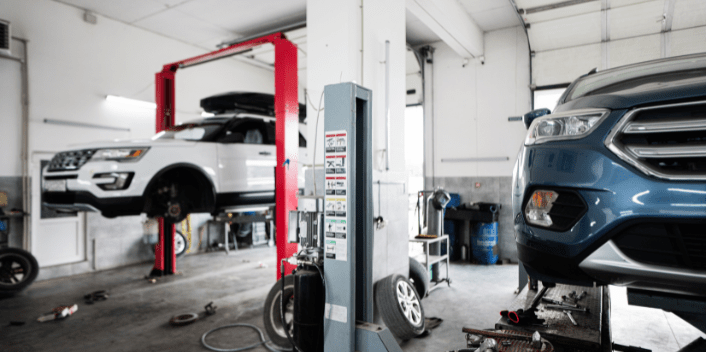
For larger repairs, complex diagnostics, transmission work, or jobs requiring shop equipment, in-shop fleet services provide a controlled repair environment and access to specialized tools.
5. Keep commonly needed parts and service history organized
Parts shortages and price changes make planning more important. Maintain accurate records for each vehicle, including:
- Vehicle identification and mileage
- Previous repairs
- Recommended service intervals
- Part numbers and specifications
- Warranty information
- Recurring faults
- Inspection reports
- Upcoming compliance dates
A complete service history helps technicians diagnose problems faster and prevents unnecessary parts replacement. It also allows managers to identify recurring failures across similar vehicles.
Do not stock parts indiscriminately. Instead, use repair history to identify components that are regularly needed for your specific fleet.
6. Combine preventative maintenance with DOT and BIT readiness
A compliance issue can remove a vehicle from service at the same time that parts and labor costs are elevated. Regular inspections help find problems before a formal compliance event or roadside inspection.
Brake condition, tires, lights, steering, suspension, exhaust, fuel systems, mirrors, wipers, and load securement all require attention. California operators should also maintain documentation supporting their inspection and repair processes.
Rapid Fleet Services provides DOT and BIT inspection services in mobile and in-shop settings across the Bay Area and Sacramento. Addressing findings promptly can reduce the risk of violations, service interruptions, and avoidable downtime.
7. Measure maintenance cost per vehicle and per mile
A total monthly repair bill does not tell you enough. Track costs by vehicle and, where possible, by mile or operating hour.
Review:
- Preventative maintenance cost
- Reactive repair cost
- Downtime hours
- Roadside events
- Repeat repairs
- Parts cost by category
- Cost per vehicle
- Cost per mile
This data shows which units are consuming the budget and why. A vehicle with higher planned maintenance costs may still be more economical than one that repeatedly fails on the road.
Protect Your Budget by Reducing Unplanned Work
Parts prices may remain unpredictable, but fleet managers can control how often their vehicles require emergency repairs. Planned inspections, documented service intervals, timely component replacement, and clear repair prioritization all reduce financial exposure.
This is especially important for Bay Area and Sacramento fleets that depend on tight delivery windows, service appointments, construction schedules, and daily route completion. A proactive program helps keep vehicles available while giving managers more time to source parts and approve repairs at standard rates.
Rapid Fleet Services supports commercial fleets with mobile and in-shop fleet maintenance services throughout the San Francisco Bay Area, Sacramento, and West Sacramento. Our technicians service small cars, light trucks, Dodge 5500 and Ford 550 medium-duty service trucks, and Hino and Isuzu box trucks from 16 to 24 feet.
With more than five years of industry experience and over 15,000 fleet vehicles serviced, we provide practical solutions designed to minimize downtime and extend vehicle life. Service is available seven days a week from 6:00 a.m. to 6:00 p.m.
Do not wait for a 20% parts increase to become a 300% emergency invoice. Contact Rapid Fleet Services to build a preventative maintenance plan for your fleet, schedule a mobile inspection, or arrange reliable commercial vehicle repair in the Bay Area or Sacramento.
Comments are closed